SAVE WATER
 Save Water

Abstract
Earth is the only known planet in this universe where life is possible only because of the availability of water and oxygen. Water is most important necessity of life for all the living beings on the earth. Without water no one can exist even for a day. We also know that there is very less percentage of clean water means drinking water available on the earth. So, we should not waste clean water and save it for future generations.
We should change our bad habits into positive ones and spread awareness among people about the importance of clean water. We should promote the less use and saving of clean water to maintain the continuity of life on the earth.
We should change our bad habits into positive ones and spread awareness among people about the importance of clean water. We should promote the less use and saving of clean water to maintain the continuity of life on the earth.
Introduction
Water is the precious gift of God on the earth. Life exists on the earth because of the availability of water. Itself being tasteless, odorless and colorless, it adds taste, color and nice smell in the life of living beings on the earth. It is found everywhere and known as life. It takes nothing from us but gives life to us. It has no shape but takes the shape of container we store it. We find it everywhere in rivers, seas, tanks, wells, ponds, etc but we lack clean drinking water. Three-fourth part of the earth is full of water however we need to conserve water as there is very less percentage of clean water.
Importance of Clean Water
Without water life is not possible on the earth. All the living beings like human, animals, plants, etc need water to grow, develop and live. Water is the only source of all lives here. We need water in all the walks of life from morning till night like drinking, cooking, bathing, washing clothes, watering plant, etc. People working in different fields need water for different purposes such as farmers need water to grow crops, gardeners to water plants, industrialists for industry work, electricity plants to generate hydro-electricity, etc. So, we should save clean water for the wellness of our future generations and healthy life of water and wildlife animals. People at many places of the world are suffering water scarcity or completely lack of water in their regions.
Why to Save Water
We are living in the time when we need to save clean water and use it according to our use only. People at many places in India and other countries are facing a huge water scarcity. They have to depend on the government water supply by tanks or some natural water reservoirs at long distance. They have to go for a long distance on daily basis to arrange drinking water. They better understand the value of water than the people who have sufficient water supply in their areas. The situation of lack of water becomes very terrible for the people who don’t have enough water to fulfill their basic needs of drinking, bathing, washing, etc.
India is one of the countries worldwide facing huge level water scarcity today. Places in India like Rajasthan and some parts of Gujarat are facing water scarcity where women and girls of the houses cover a long distance on bare foot to just get a pot of water. In some cities like Bangalore people have to buy water bottles worth Rs. 25 to Rs. 30 to drink clean water. People face more problems during summer months when the daily need of water increases. Recently, it is studied that around 25% urban population lacks availability to clean drinking water. In some areas, the privatization of water bodies is the main reason of water scarcity.
Simple Ways to Save Water
There are various simple ways which we can use on daily basis and save gallons of water daily. Following are save water techniques which we must use to save water at home and other places:
- We should use shower heads with low-flow (also called as energy-efficient shower heads), low-flush toilets and composting toilets (instead of conventional western toilets as they use large volumes of water) or dual flush toilets (it uses very less water than others).
- Keep the tap close while doing hand wash, tooth brush, face wash, washing dishes, etc.
- Collect rain water during rainy season to use in toilet flush, watering plants, sprinkle in garden, etc. Using raw water like sea water or non-purified water in toilet is also good.
- We should be habitual of reusing or recycling waste water.
- We should promote rainwater harvesting, using high-efficiency clothes washers, weather-based irrigation controllers, garden hose nozzles, low flow taps in wash basins, swimming pool covers, automatic faucet, etc for water conservation.
- Water saving techniques should also be given priority in the commercial areas as it is a big area where gallons of water can be saved on daily basis.
- Water saving techniques in the business areas are like waterless urinals, waterless car washes, infrared or foot-operated taps, pressurized water brooms, cooling tower conductivity controllers, water-saving steam sterilizers (in hospitals and health care units), rain water harvesting, water to water heat exchangers, etc.
- Agriculture field is also a vast area where we can save more water on daily basis if we follow water saving techniques. We can use overhead irrigation for crop irrigation (using center-pivot or lateral-moving sprinklers), minimize evaporation, runoff or subsurface drainage, etc.
- Use of green manures, recycling of crop residues, mulching, animal manure, etc in the field improves the soil organic matter which again increases the water holding capacity and ability to absorb water (during torrential rains) of the soil.
- Water saving techniques is also promoted at the social and community level by the municipal water utilities or regional governments through the use of common strategies like public outreach campaigns pay higher price for increasing water use, restrictions on use of clean water for outdoor activities like lawn watering, floor cleaning, car washing, etc.
- There should be universal metering for water supply to each home just like electricity. This facility is only available some UK households areas and urban Canadian homes. It is estimated by the US Environmental Protection Agency that water metering is an effective technique which alone can reduce water consumption by 20 to 40% on daily basis.
- The growth of more water-efficient crops adopting less irrigation should be promoted as only crop irrigation takes around 70% of the world’s fresh water.

Water conservation
Methods of water conservation
Water conservation projects can be done anywhere and in any kind of structure. Here are different water conservation methods where major savings can be done, without much hassles:
Rainwater harvesting

Rainwater harvesting is a very effective method of conserving natural water and replenishing the groundwater level. In this method of conservation of water, the rain water is collected and allowed to percolate into a deep pit or a reservoir, so that it seeps down and improves the ground water table.
Farmers can contribute to the water management efforts using the drip irrigation method where plants are watered with the help of narrow tubes. This water is delivered directly at the base of the plant, thus conserving water.
How to harvest rainwater?
Under a rainwater harvesting project, artificially designed systems are deployed for the collection and storage of rainwater, as explained below:
- Catchment for collecting and storing rainwater
- A conveyance system for transporting the harvested rainwater to the recharge zone.
- Flushing out the first spell of rain
- Filtering the stored water to remove pollutants
- Tanks and recharge structures for storing filtered water
See also: Why water harvesting is the best way to end water shortages
Water metering

Another efficient way of cutting down water wastage is to install water meters and measure the amount of water that is being used in residential and commercial buildings. The volume of water that is used, is calculated and charged according to the price of water. Always monitor the water bills for unusually high usage. It can help detect any leakage.
Also read about DJB bill view: How to pay Delhi Jal Board water bills online in Delhi?
Grey water recycling

Greywater recycling is a method of saving used and waste water from kitchen sinks, washing machines and showers, which is then recycled for usage in toilets, for watering plants, etc. Unlike rainwater harvesting which relies on rainwater, greywater is surplus in volume. Environmentalists have demonstrated that the usage of this recycling system has reduced almost 70% of domestic water usage.
Also read: Bamboo house design and construction ideas for sustainable living
Efficient irrigation technology

Maintenance of lawns and gardens required large quantities of water. efficient outdoor irrigation technologies such as smart irrigation controllers are beneficial as they help conserve water. These irrigation controllers track factors such as precipitation or temperature and avoid over-watering the fields. Moreover, you can further save water spray sprinklers that deliver water directly to plants as these are buried under the lawn.
Pressure reducing valves

A pressure reducing valve basically controls the amount of pressure in a hydraulic system. These valves ensure a pre-set level of water that is to be used. In this way, downstream components used in the water system last longer and water consumption is also reduced. This is a very efficient solution for water conservation in industrial, residential, commercial and institutional buildings.
See also: All about BWSSB
Water efficient bathroom accessories

Currently, the market is flooded with water-efficient toilet tanks, taps and shower heads that can cut water consumption by up to 60%. Innovations, such as change in spray patterns in taps and showers and increased pressure for flushing in toilets, are pushing the boundaries of water conservation, without compromising on usage habits.
See also: Ways in which citizens and housing societies can save water
Insulated pipes
In most buildings, hot water return pipes remain uninsulated or not insulated correctly. Taps are kept open as one waits for hot water to flow from faucets or showers, which may result in wastage of water. The process of insulating piping and storage tanks for domestic hot water system helps in conservation of water. Insulating the pipes properly ensures immediately availability of hot water and when the tap is closed, it is supplied back to the plant, minimising the energy demand of the heating unit.
Water-saving technology for commercial spaces
There are many water-saving devices, which can be installed in commercial buildings. Some of the popular systems include:
- Waterless car washes
- Pressurised waterbrooms instead of a hose for cleaning sidewalks.
- X-ray film processor re-circulation systems
- Cooling tower conductivity controller
- Waterless urinals in bathrooms
- Advanced faucets like infrared or foot-operated taps. These devices help conserve water by using short bursts of water for rinsing in a kitchen or bathroom.
- Steam sterilisers, which are machines used for sterilisation process in hospitals and health care facilities
- Water to water heat exchangers
Different traditional methods of water conservation in India
Rapid urbanisation and water pollution have been severely impacting the quantity and quality of surface and groundwater in several parts of India. The country’s agricultural system is still largely dependent on rainfall. Given the changing rainfall patterns, the government has been considering the revival of traditional water conservation methods.
Some of them are listed below:
Talab or Bandhi
Talabs or pond are reservoirs to store water for drinking and household consumption. These ponds may be natural or manmade. A reservoir spread over less than five bighas is known as talab whereas a medium-sized lake is known as a bandhi.

Jhalaras
Jhalaras were constructed for regular water supply for community use, religious rites, and royal ceremonies in the past. These are rectangular-shaped stepwells with tiered steps on three or four sides. The subterranean water seepage from a lake or an upstream reservoir gets collected in these stepwells.

Baoli
Baolis were constructed by the ruling class for strategic, civic, or philanthropic purposes. These structures were open to people of all sections of the society. Baolis are stepwells that were beautifully designed with arches and motifs. The place where these baolis were located mainly determined their purposes. For instance, baolis on trade routes were used as resting spots while those located inside villages were for used for utilitarian purposes and social gatherings.

Kund
Kunds were built for the conservation of water and harvesting rainwater for drinking purposes, mainly in Gujarat and Rajasthan. It is basically a catchment area shaped like a saucer, sloping towards the circular underground well at the centre. Modern kunds are built with cement. In earlier days, they were covered in disinfectant lime and ash.

Bawari
An example of traditional water conservation methods in India, Bawaris are stepwells that formed the earliest water storage networks in Rajasthan. They were uniquely designed to divert the minimum rainfall the region would receive to artificial tanks via canals constructed on hilly terrain in the city outskirts.

Taanka
Taanka is among the traditional types of water conservation systems involving rainwater harvesting technique specific to the Thar desert region in Rajasthan. Taanka is a cylindrical paved underground pit, where rainwater flows from courtyards, rooftops and artificially prepared catchments.
Nadi
Nadis refer to village ponds where rainwater collects from neighbouring natural catchment areas. As these water bodies get water supply from irregular, torrential rainfall, they would witness quick siltation due to large amounts of sandy sediments deposited regularly.
Bamboo drip irrigation system
Among the different methods of water conservation in India, the system of bamboo drip irrigation has been practiced in northeastern parts of the country. It is an over 200-year-old technique developed by tribal farmers for irrigating terrace fields. In this system, water from perennial springs is transported using bamboo pipes.

Zings
Zings are water harvesting structures found in Ladakh. These are small tanks built to collect the melting glacier water. This one of the easiest water conservation and management methods in such mountainous regions. Water from the glacier is diverted to the tank through a network of guiding channels.
Kuhls
Tapping glacial waters coming from rivers and streams through surface water channels has been one of the oldest ways of water conservation in the hilly terrains of Himachal Pradesh. These channels are known as Kuhls widely used for irrigation of over 30,000 hectares of fields in the region. There are hundreds of Kuhls in the region.

Jackwells
This is one of the oldest water conservation practices in India. Jackwells are small pits used for harvesting rainwater. In earlier times, people in the low-lying regions of the Great Nicobar Islands constructed the structure using bamboo and logs of wood.

Water harvesting structures of Ramtek
One of the traditional save water projects and techniques is the Ramtek model in Maharashtra. The system uses a network of groundwater and surface water bodies where tanks connected by underground and surface canals form a link, from the foothills to the plains. Once water fills the tanks in the hills, it flows to the successive tanks.

Water conservation in other parts of India
Burhanpur in Madhya Pradesh has a network of well-connected water drainage and storage systems. Every fort in the region houses well-organised storage systems for conserving water. These forts served as a space for providing supplies during wars and movement outside were restricted. Thus, these structures helped in storage of water.
Dholavira in Gujarat is an historical site of the Indus Valley civilization. There are several lake-shaped storage reservoirs built to store surface water during the rainy months.
Water conservation includes all the policies, strategies and activities to sustainably manage the natural resource of fresh water, to protect the hydrosphere, and to meet the current and future human demand (thus avoiding water scarcity). Population, household size and growth and affluence all affect how much water is used. Factors such as climate change have increased pressures on natural water resources especially in manufacturing and agricultural irrigation.[1] Many countries have already implemented policies aimed at water conservation, with much success.[2] The key activities to conserve water are as follows: any beneficial reduction in water loss, use and waste of resources,[3] avoiding any damage to water quality; and improving water management practices that reduce the use or enhance the beneficial use of water.[4][5] Technology solutions exist for households, commercial and agricultural applications. Water conservation programs involved in social solutions are typically initiated at the local level, by either municipal water utilities or regional governments.

The key activities to conserve water are as follows:
- Any beneficial reduction in water loss, use and waste of resources.[3]
- Avoiding any damage to water quality.
- Improving water management practices that reduce the use or enhance the beneficial use of water.[4][5]
One of the strategies in water conservation is rain water harvesting.[8] Digging ponds, lakes, canals, expanding the water reservoir, and installing rain water catching ducts and filtration systems on homes are different methods of harvesting rain water. Many people in many countries keep clean containers so they can boil it and drink it, which is useful to supply water to the needy.[8] Harvested and filtered rain water can be used for toilets, home gardening, lawn irrigation, and small scale agriculture.[8]
Another strategy in water conservation is protecting groundwater resources. When precipitation occurs, some infiltrates the soil and goes underground.[9] Water in this saturation zone is called groundwater.[9] Contamination of groundwater causes the groundwater water supply to not be able to be used as a resource of fresh drinking water and the natural regeneration of contaminated groundwater can take years to replenish.[10] Some examples of potential sources of groundwater contamination include storage tanks, septic systems, uncontrolled hazardous waste, landfills, atmospheric contaminants, chemicals, and road salts.[10] Contamination of groundwater decreases the replenishment of available freshwater so taking preventative measures by protecting groundwater resources from contamination is an important aspect of water conservation.[8]
An additional strategy to water conservation is practicing sustainable methods of utilizing groundwater resources.[8] Groundwater flows due to gravity and eventually discharges into streams.[9] Excess pumping of groundwater leads to a decrease in groundwater levels and if continued it can exhaust the resource.[8] Ground and surface waters are connected and overuse of groundwater can reduce and, in extreme examples, diminish the water supply of lakes, rivers, and streams.[10] In coastal regions, over pumping groundwater can increase saltwater intrusion which results in the contamination of groundwater water supply.[10] Sustainable use of groundwater is essential in water conservation.
A fundamental component to water conservation strategy is communication and education outreach of different water programs.[11] Developing communication that educates science to land managers, policy makers, farmers, and the general public is another important strategy utilized in water conservation.[11] Communication of the science of how water systems work is an important aspect when creating a management plan to conserve that system and is often used for ensuring the right management plan to be put into action.[11]
The conservation of water is extremely important in order to preserve wildlife habitats. There are many organisms in temperate regions who are affected by shortages in water.[12] Additionally, many freshwater organisms are increasingly feeling the impacts of water pollution as it disrupts the ecosystem.[12]
"World Water Day" is celebrated on 22 March.[13]

Social solutions[edit]

Water conservation programs involved in social solutions are typically initiated at the local level, by either municipal water utilities or regional governments. Common strategies include public outreach campaigns,[14] tiered water rates (charging progressively higher prices as water use increases), or restrictions on outdoor water use such as lawn watering and car washing.[15] Cities in dry climates often require or encourage the installation of xeriscaping or natural landscaping in new homes to reduce outdoor water usage.[16] Most urban outdoor water use in California is residential,[17] illustrating a reason for outreach to households as well as businesses.
One fundamental conservation goal is universal water metering. The prevalence of residential water metering varies significantly worldwide. Recent studies have estimated that water supplies are metered in less than 30% of UK households.[18] Although individual water meters have often been considered impractical in homes with private wells or in multifamily buildings, the US Environmental Protection Agency estimates that metering alone can reduce consumption by 20 to 40 percent.[19] In addition to raising consumer awareness of their water use, metering is also an important way to identify and localize water leakage. Water metering might benefit society by providing a financial incentive to avoid waste in water use.[20]
Some researchers have suggested that water conservation efforts should be primarily directed at farmers, in light of the fact that crop irrigation accounts for 70% of the world's fresh water use.[21] The agricultural sector of most countries is important both economically and politically, and water subsidies are common. Conservation advocates have urged removal of all subsidies to force farmers to grow more water-efficient crops and adopt less wasteful irrigation techniques.[22]
New technology poses a few new options for consumers, features such as full flush and half flush when using a toilet are trying to make a difference in water consumption and waste. It is also possible to use/"pollute" the water in stages (keeping use in flush toilets for last), hereby allowing more use of the water for various tasks within a same cycle (before it needs to be purified again, which can also be done in-situ). Earthships often use such a setup.
Also available are modern shower heads that help reduce wasting water: Old shower heads are said to use 5-10 gallons per minute, while new fixtures available use 2.5 gallons per minute and offer equal water coverage.[23] Another method is to recycle the water of the shower directly, by means a semi-closed system which features a pump and filter. Such a setup (called a "water recycling shower") has also been employed at the VIRTUe LINQ house. Besides recycling water, it also reuses the heat of the water (which would otherwise be lost).[24][25]
Contrary to the popular view that the most effective way to save water is to curtail water-using behavior (e.g., by taking shorter showers),[26] experts suggest the most efficient way is replacing toilets and retrofitting washers; as demonstrated by two household end use logging studies in the US.[27][28]
Water-saving technology for the home includes:
- Low-flow shower heads sometimes called energy-efficient shower heads as they also use less energy
- Low-flush toilets, composting toilets and incinerating toilets. Composting toilets have a dramatic impact in the developed world, as conventional Western flush toilets use large volumes of water
- Dual flush toilets include two buttons or handles to flush different levels of water. Dual flush toilets use up to 67% less water than conventional toilets
- Faucet aerators, which break water flow into fine droplets to maintain "wetting effectiveness" while using less water. An additional benefit is that they reduce splashing while washing hands and dishes
- Raw water flushing where toilets use sea water or non-purified water (i.e. greywater)
- Wastewater reuse or recycling systems, allowing:
- Reuse of graywater for flushing toilets or watering gardens
- Recycling of wastewater through purification at a water treatment plant. See also Wastewater - Reuse
- Rainwater harvesting
- High-efficiency clothes washers
- Weather-based irrigation controllers
- Garden hose nozzles that shut off the water when it is not being used, instead of letting a hose run.
- Low flow taps in wash basins
- Swimming pool covers that reduce evaporation and can warm pool water to reduce water, energy and chemical costs.
- Automatic faucet is a water conservation faucet that eliminates water waste at the faucet. It automates the use of faucets without the use of hands.
Smart water meters are also a promising technology for reducing household water usage. A study conducted in Valencia, Spain, shows the potential that smart meter-based water consumption feedback has for conserving water in households. The findings showed that households that were equipped with smart water meters increased their water savings. This technology works to show people how much water they were using in their household, suggest ways they can reduce water usage, and incentivize water savings with physical rewards.[29]
Commercial applications[edit]
Many water-saving devices (such as low-flush toilets) that are useful in homes can also be useful for business water saving. Other water-saving technology for businesses includes:
- Waterless urinals (also can be installed in schools)
- Waterless car washes
- Infrared or foot-operated taps, which can save water by using short bursts of water for rinsing in a kitchen or bathroom
- Pressurized waterbrooms, which can be used instead of a hose to clean sidewalks
- X-ray film processor re-circulation systems
- Cooling tower conductivity controllers
- Water-saving steam sterilizers, for use in hospitals and health care facilities
- Rain water harvesting
- Water to Water heat exchangers.
It is important to consider implementing water-conserving changes to industrial and commercial application use. It was found that high-income countries use roughly 59% of their water for industrial usage while low-income countries use 8% for industrial usage.[30] One big change that industrial and commercial companies can implement are to improve the assessment and maintenance of water systems.[31] It is easy to add water-efficient applications but it is the proper maintenance and inspection of it which will lead to long-term changes. A water conservation plan can be created, including adding various goals and benchmarks for both the employees and the company.[31] Another change that industrial and commercial companies can make are to check water-consuming systems at regular intervals for any leaks or problems.[31] By doing this, it will ensure that water is not unnecessarily being lost and there is no excess money being spent on utility bills. A third change that industrial and commercial companies can implement is installing a rain sensor. This sensor should be able to detect when precipitation is occurring and stop the program which would normally irrigate the land. After the rain ends, the sensor should turn the program back on and resume to its normal watering cycle.[32]
Agricultural applications[edit]

Water is an essential part of irrigation. Plants always take a lot of ground water thus ground water should be replenished. For crop irrigation, optimal water efficiency means minimizing losses due to evaporation, runoff or subsurface drainage while maximizing production.[33] An evaporation pan in combination with specific crop correction factors can be used to determine how much water is needed to satisfy plant requirements. Flood irrigation, the oldest and most common type, is often very uneven in distribution, as parts of a field may receive excess water in order to deliver sufficient quantities to other parts. Overhead irrigation, using center-pivot or lateral-moving sprinklers, has the potential for a much more equal and controlled distribution pattern. Drip irrigation is the most expensive and least-used type, but offers the ability to deliver water to plant roots with minimal losses. However, drip irrigation is increasingly affordable, especially for the home gardener and in light of rising water rates. Using drip irrigation methods can save up to 30,000 gallons of water per year when replacing irrigation systems that spray in all directions.[34] There are also cheap effective methods similar to drip irrigation such as the use of soaking hoses that can even be submerged in the growing medium to eliminate evaporation.
As changing irrigation systems can be a costly undertaking, conservation efforts often concentrate on maximizing the efficiency of the existing system. This may include chiselling compacted soils, creating furrow dikes to prevent runoff, and using soil moisture and rainfall sensors to optimize irrigation schedules.[19] Usually large gains in efficiency are possible through measurement and more effective management of the existing irrigation system. The 2011 UNEP Green Economy Report notes that "[i]mproved soil organic matter from the use of green manures, mulching, and recycling of crop residues and animal manure increases the water holding capacity of soils and their ability to absorb water during torrential rains",[35] which is a way to optimize the use of rainfall and irrigation during dry periods in the season.
As seen in China, plastic mulch also has the potential to conserve water in agricultural practices. The "mulch" is really a thin sheet of plastic that is placed over the soil. There are holes in the plastic for the plants to grow through. Some studies have shown that plastic mulch conserves water by reducing the evaporation of soil moisture, however, there haven't been enough applied studies to determine the total water savings that this practice may bring about.[36]
Water reuse[edit]
Water shortage has become an increasingly difficult problem to manage. More than 40% of the world's population live in a region where the demand for water exceeds its supply. The imbalance between supply and demand, along with persisting issues such as climate change and population growth, has made water reuse a necessary method for conserving water.[37] There are a variety of methods used in the treatment of waste water to ensure that it is safe to use for irrigation of food crops and/or drinking water.
Seawater desalination requires more energy than the desalination of fresh water. Despite this, many seawater desalination plants have been built in response to water shortages around the world. This makes it necessary to evaluate the impacts of seawater desalination and to find ways to improve desalination technology. Current research involves the use of experiments to determine the most effective and least energy intensive methods of desalination.[38][39][40]
Sand filtration is another method used to treat water. Recent studies show that sand filtration needs further improvements, but it is approaching optimization with its effectiveness at removing pathogens from water.[41][42] Sand filtration is very effective at removing protozoa and bacteria, but struggles with removing viruses.[43] Large-scale sand filtration facilities also require large surface areas to accommodate them.
The removal of pathogens from recycled water is of high priority because wastewater always contains pathogens capable of infecting humans. The levels of pathogenic viruses have to be reduced to a certain level in order for recycled water to not pose a threat to human populations. Further research is necessary to determine more accurate methods of assessing the level of pathogenic viruses in treated wastewater.[44]
Problem areas[edit]
Wasting of water[edit]

Wasting of water is the flip side of water conservation and, in household applications, it means causing or permitting discharge of water without any practical purpose. Inefficient water use is also considered wasteful. By EPA estimate, household leaks in the US can waste approximately 900 billion gallons (3.4 billion cubic meters) of water annually nationwide.[45] Generally, water management agencies are reluctant or unwilling to give a concrete definition to a relatively vague concept of water waste.[46]
However, definition of water waste is often given in local drought emergency ordinances. One example refers to any acts or omissions, whether willful or negligent, that are "causing or permitting water to leak, discharge, flow or run to waste into any gutter, sanitary sewer, watercourse or public or private storm drain, or to any adjacent property, from any tap, hose, faucet, pipe, sprinkler, pond, pool, waterway, fountain or nozzle."[47] In this example, the city code also clarifies that "in the case of washing, "discharge," "flow" or "run to waste" means that water in excess of that necessary to wash, wet or clean the dirty or dusty object, such as an automobile, sidewalk, or parking area, flows to waste.
Water utilities (and other media sources) often provide listings of wasteful water-use practices and prohibitions of wasteful uses. Examples include utilities in San Antonio, Texas.[48] Las Vegas, Nevada,[49] California Water Service company in California,[50] and City of San Diego, California.[51] The City of Palo Alto in California enforces permanent water use restrictions on wasteful practices such as leaks, runoff, irrigating during and immediately after rainfall, and use of potable water when non-potable water is available.[52] Similar restrictions are in effect in the State of Victoria, Australia.[53] Temporary water use bans (also known as "hosepipe bans") are used in England, Scotland, Wales and Northern Ireland.[54]
Strictly speaking, water that is discharged into the sewer, or directly to the environment is not wasted or lost. It remains within the hydrologic cycle and returns to the land surface and surface water bodies as precipitation. However, in many cases, the source of the water is at a significant distance from the return point and may be in a different catchment. The separation between extraction point and return point can represent significant environmental degradation in the watercourse and riparian strip. What is "wasted" is the community's supply of water that was captured, stored, transported and treated to drinking quality standards. Efficient use of water saves the expense of water supply provision and leaves more fresh water in lakes, rivers and aquifers for other users and also for supporting ecosystems. For example, we should not treat toilet as a trash can. If we flush cigarette butts or tissues in it, we are wasting gallons of water. Because the process of recycling water cannot be accomplished.[55]
A concept that is closely related to water wasting is "water-use efficiency". Water use is considered inefficient if the same purpose of its use can be accomplished with less water. Technical efficiency derives from engineering practice where it is typically used to describe the ratio of output to input and is useful in comparing various products and processes.[56] For example, one showerhead would be considered more efficient than another if it could accomplish the same purpose (i.e., of showering) by using less water or other inputs (e.g., lower water pressure). The technical efficiency concept is not useful in making decisions of investing money (or resources) in water conservation measures unless the inputs and outputs are measured in value terms. This expression of efficiency is referred to as economic efficiency and is incorporated into the concept of water conservation.
Water conservation: Why is it important?
An average utilises about 140 litres of water per day. Lack of water on a large scale can lead to serious water scarcity issues. Water conservation is important for several reasons:
- Water distribution is uneven and therefore, large parts of India remain deficient in rain, as well as groundwater.
- This unequal distribution across the country, makes most of the population face water scarcity.
- The requirement of water in urban areas is higher than the availability. Moreover, water conservation will ensure availability of clean for future generations. This can be done by ensuring that the consumption of freshwater from an ecosystem does not exceed its natural rate of renewal.
- Since rainfall in India is highly seasonal, water is required to irrigate crops. Water protects the ecosystem and wildlife.
- Moreover, conserving water also saves energy. That is, by using smart appliances which are water and energy-efficient, we can reduce water usage and save energy too. Energy is essential to filter, heat and pump water in households. Minimising water use can lead to reduction in carbon footprint.
- Water conservation also saves finances. Installing a water meter at home will enable use of less water, and lead to lesser charges levied by the water supply company.
- Lesser consumption of water will maintain more water in the environments and help sustain the wetland habitats for plants, wildlife and aquatic life. It is especially important during dry seasons.
- The extraction of freshwater from the icebergs has increased significantly in recent years. The demand for water has also gone up to a great extent, including the need for power supply water-based power generation.
Water conservation: A solution for water related problems
Several countries have been dealing with severe water shortages, mainly caused due to overpopulation. The depleting water tables, which is also caused by deforestation, has become a serious concern.
Global warming also has an impact by creating water shortages at some places and increasing the existing crisis at other places.
Compared to the developing countries, the more developed countries are able to tackle the problem and conserve water through various methods like recycling wastewater, desalinating seawater, building dams, importing food, utilising deep water aquifers, etc. Aforestation can aid water in penetrating the soil and replenish the water table.
Water conservation, mainly by reusing and recycling water, may be an effective solution to the problem. Nearly one fifth of a city’s water needs can be fulfilled through such methods. Many countries, including India, are reviving traditional water conservation practices.
Water conservation: Interesting facts
Water is a natural resource that is vital for the existence of life on earth. However, misuse and wastage of water have resulted in a water crisis affecting several parts of the world.
- Rainfall accounts for nearly 85% of water available in India. The remaining 15% comes from melting snow.
- The Indian government launched the ‘Namami Gange’ programme for the Ganges river basin as part of a major water rejuvenation plan.
- India’s water requirement is 1100 billion cubic meters per year.
- The agricultural industry accounts for 80% of the overall water consumption in the country.
- Water shortage also leads to income loss as many women spend about 150 million workdays per year carrying and fetching water.
- Nearly ten crore people use water having excessive fluoride levels.
- The population across the world has increased to over 6 billion people from 1900s. Hence, the consumption of water has also grown to 600%. Consequently, inadequate access to clean water has impacted the health of people.
Here are some facts on water you should know:
- There is a limited amount of water on earth. Based on the water cycle, the water that is available right now is repeatedly recycled.
- Nearly 97% of all water present on earth is salt water that is not suitable for drinking. About three percent of water is freshwater out of which only 0.5% is suited for drinking and the remaining is found in glaciers, atmosphere, soil, etc. that cannot be consumed.
- Plants are crucial for maintaining the ecosystem and require water for survival.
- The average human body of an adult contains 50 to 65 percent of water, while the percentage is higher in infants.
- Industries utilise large amounts of water as raw material for various purposes, including cleaning, heating, cooling, and generating electricity. Moreover, besides everyday activities like drinking, bathing, washing, etc., water is required for irrigation, dispersal of seeds and fruits, transport, and recreation.
- Since water has fluidity and solubility properties, it helps digestion, blood circulation in the body, and excretion. It helps regulate the body temperature through sweating.
Sources of water
About 97% of the water on earth is found in oceans and seas, and the remaining 3% comes from other water bodies such as lakes, rivers, ponds, etc. Besides, some amount of water is also present in the air.
NGOs working on water conservation in India
The government in India has taken several steps and projects to save water and implemented water conservation projects. In addition, nonprofit institutions are making significant contributions to water conservation in India. Some NGOs that have been promoting sustainable water conservation practices are mentioned below:
Tarun Bharat Sangh
Tarun Bharat Sangh is a non-profitable environmental NGO that aims to achieve water conservation objectives by involving the community at every stage of development work and adopting indigenous water harvesting methods. The NGO has revived ten rivers and transformed drought-prone areas spanning 10,000 sq km in Rajasthan, which is among the most water-deficient states in India.
SARA (Sustainable Alternatives for Rural Accord)
The organisation has led the ‘Swagrama’ programme and worked on the ground at various levels to understand and implement sustainable models. This project on water conservation is inspired by Mahatma Gandhi’s dream project, ‘Village Swaraj’, and aims to achieve self-sustainable rural development.
Environmentalist Foundation of India
It is an environmental conservation group that focuses on wildlife conservation and restoration of freshwater habitats like lakes and ponds through scientific means. Some water conservation projects undertaken by the organisation include the restoration of the Kinhi-Gadegaon Reservoir in Maharashtra, Tirunelveli-Keezh Ambur Lake in Tamil Nadu and Navule Kere in Shivamogga, Karnataka.
Jal Bhagirathi Foundation
The NGO is leading efforts to tackle water scarcity in the Marwar region of Rajasthan, which among the most densely populated arid zones in the world. The NGO focuses on reviving and constructing rainwater harvesting structures to recharge groundwater. It is also supporting communities in building rainwater harvesting tanks or tankas.
Dreams Alive
The NGO has been supporting farmers across the delta region of Tamil Nadu by restoring ponds that are the primary water resource for households, irrigation, cattle, wild animals, etc. It is also focusing on improving the livelihood of farmers, by increasing ground-water levels and addressing water shortage

Water efficiency

Water efficiency is the practice of reducing water consumption by measuring the amount of water required for a particular purpose and is proportionate to the amount of essential water used.[1][2] Water efficiency differs from water conservation in that it focuses on reducing waste, not restricting use.[3] Solutions for water efficiency not only focus on reducing the amount of potable water used but also on reducing the use of non-potable water where appropriate (e.g. flushing toilet, watering landscape, etc.).[4] It also emphasizes the influence consumers can have on water efficiency by making small behavioral changes to reduce water wastage, and by choosing more water-efficient products.
Importance[edit]
According to the UN World Water Development Report, over the past 100 years, global water use has increased by a factor of six. Annually, the rate steadily increases at an estimated amount of one percent as a result of population increase, economic development and changing consumption patterns. [5][6] Increasing human demand for water coupled with the effects of climate change mean that the future of water supply is not secure. Billion people do not have safe drinking water. In addition, there are changes in climate, population growth, and lifestyles. The changes in human lifestyle and activities require more water per capita. This creates competition for water among agricultural, industrial, and human consumption.[5][7]
Organizations[edit]

Many countries recognize water scarcity as a growing problem.[8] Global organizations such as the World Water Council, continue to prioritize water efficiency alongside water conservation.
The Alliance for Water Efficiency, Waterwise, California Water Efficiency Partnership (formally the California Urban Water Conservation Council), Smart Approved WaterMark in Australia, and the Partnership for Water Sustainability in British Columbia in Canada are non-governmental organizations that support water efficiency at national and regional levels.
Governmental organizations such as Environment Canada, the EPA in the USA, the Environment Agency in the UK, DEWR in Australia, have recognized and created policies and strategies to raise water efficiency awareness. The EPA established the WaterSense in 2006. The program is a voluntary program to encourage water efficiency in the United States by identifying and testing products that demonstrate improvement over standard models for toilets, bathroom faucets and faucet accessories, urinals, and residential shower heads through the use of the WaterSense label.
The government of China created a five-year (2010-2015) plan to deliver safe drinking water to about 54 percent of the population by 2015. It would cost about $66 billion US dollars or ¥410 billion Yuan to upgrade about 57,353 miles (92,300 kilometers) of main pipes and water treatment plants. The government hopes these steps will help to better conserve water and meet demands.[9]
The Indian state of Haryana implemented the State Rural Water Policy 2012; under this policy individual household metered connections would be provided to 50% of the rural population by 2017, to stop water wastage in villages.[10]

Water efficient solutions[edit]
Residential[edit]

Water efficiency solutions in residences[11] include:
- Turning off the faucet sink while brushing teeth — saves approximately five gallons (about 19 liters) of water
- Installing faucet aerators
- Fixing a water valve leakage
- Only running the dishwasher and washing machine with a full load
- Taking a shower instead of a bath
- Washing fruits and vegetables in a bowl rather than continuously running the tap water
- Using leftover water for houseplants
- Using a watering can or garden hose with a trigger nozzle instead of a sprinkler
- Using a bucket and sponge when washing a car rather than a running a hose
- Washing clothes and linens in a washing machine rather than washing them by hand
- Recycling greywater for toilet flushing water and garden use
- Watering outdoor plants in the morning or in the evening when temperatures are cooler
Consumers can voluntarily, or with government incentives or mandates, purchase water-efficient appliances such as low-flush toilets and washing machines.
Manufacturers[edit]
Water efficiency solutions in manufacturing:[12]
- Identifying and eliminating wastage (such as leaks) and inefficient processes (such as continual spray devices on stop-start production lines). This may be the most low-cost area for water savings, as it involves minimal capital outlay. Savings can be made through implementing procedural changes, such as cleaning plant areas with brooms rather than water.
- Changing processes and plant machinery. A retrofit of key plant equipment may increase efficiency. Alternatively, upgrades to more efficient models can be factored into planned maintenance and replacement schedules.
- Reusing wastewater. As well as saving on mains water, this option may improve the reliability of supply, whilst reducing trade waste charges and associated environmental risks.
Waterless products[edit]
- Using waterless car wash products to wash cars, boats, motorcycles, and bicycles. This could save up to 150 U.S. gallons (570 L) of water per wash.
Utilities[edit]
The United States Environmental Protection Agency (EPA) makes the following recommendations for communities and utilities:[13]
- Implementing a water-loss management program (e.g. locate and repair leaks).
- Universal metering.
- Ensuring that fire hydrants are tamperproof.
- Equipment changes — setting a good example by using water-efficient equipment.
- Installing faucet aerators and low-flow shower heads in municipal buildings.
- Replacing worn-out plumbing fixtures, appliances, and equipment with water-saving models.
- Minimizing the water used in space cooling equipment in accordance with the manufacturer's recommendations.
- Shutting off cooling units when not needed.
- Encouraging the use of urinals instead of toilet stalls in school (boys') and work office (men's) restrooms.
Utilities can also modify their billing software to track customers who have taken advantage of various utility-sponsored water conservation initiatives (toilet rebates, irrigation rebates, etc.) to see which initiatives provide the greatest water savings for the least cost.
Water policies and impact assessments[edit]


Environmental policies and the difference usages of models that are generated by these enforcement can have significant impacts on society. Hence, improving policies regarding environmental justice issues often require local government's decision-making, public awareness, and a significant amount of scientific tools. Furthermore, it is important to understand that positively impacting policy decisions require more than good intentions, and they necessitate analysis of risk-related information along with consideration of economic issues, ethical and moral principles, legal precedents, political realities, cultural beliefs, societal values, and bureaucratic impediments.[14] Also, ensuring that the rights of people regardless of their age, race, and background are being protected should not be neglected according to "The Role of Cumulative risk Assessment in Decisions about Environmental Justice." If a policy protects the natural environment but negatively affects those who are in the reach of the enforcement of the policy, that policy is subjected to revaluation.[14] Researchers suggest racial and socioeconomic disparities in exposure to environmental hazards describing the demographic composition of areas and their proximity to hazardous sites.[15] Then, any improvements of a social policy and models that are generated by these improvements should reflect the policy-makers' and researchers' environmental justice beliefs. Therefore, researchers and social changes should examine the promises and pitfalls associated with the environmental justice struggles, explore implications of proposed solutions, and recognize the fact that tools necessary to sufficiently carry preceding requirements are underdeveloped.[16]
Examples[edit]
Reef Plan (Australia)[edit]
The Reef Plan began to incorporate new ways to create models that integrate environmental, economical, and social consequences.[17] Pre-existing Australian water policies were often criticized by previous models for investment prioritization and economic dimensions when it came to policy impact assessment. However, the policy makers and researchers in Australia now suggest that "sustainability focused policy requires multi-dimensional indicators" that combine different disciplines.[17] The Reef Plan allows the policy makers to identify issues relating to Reef water quality and implement management strategies and actions to conserve and rehabilitate areas such as riparian zones and wetlands.[18] With the Reef Plan, Nine strategies were implemented in the Great Barrier Reef region. They include self-management approaches, education, and extension, economic incentives, planning for natural resources management and land use, regulatory frameworks, research and information sharing, partnership, priorities and targets, and monitoring and evaluation.[18] And such improvements invoked benefits such as:
- A more comprehensive picture of the policy impacts. New models projected possible outcomes of different simulations of the proposed policies under various circumstances. In addition, they provided the optimal decisions to be made regarding each outcome through the usage of what is known as computable general equilibrium (CGE) which “integrate dynamics on a catchment scale”[18]
- Helping the aggregation of both economic aspects of water and non-monetary elements of water usage.[18]
- Acknowledging the fact that farm production should depend on the global dynamics[18]
Conserved Water Statutes (United States)[edit]

Conserved Water Statutes are state laws enacted by California, Montana, Washington, and Oregon to conserve water and allocate water resources to meet the needs of increasing demand for water in the dry lands where irrigation is or was occurring. These laws help the states to dismiss the disincentives to conserve water and do so without damaging pre-existing water rights.[19] Because any extra amount of water after applying water to beneficiaries of the pre-existing water policies does not belong to the appropriators, such a condition creates an incentive to use as much water as possible rather than saving.[19][20] This obviously causes the costs of irrigation to be greater than the optimal amount which makes the policy very inefficient. However, by enacting Conserved Water Statutes, state legislatures are able to address the disincentives to save water.[19] The policy allows the appropriators to have rights over the surplus water and enforces them to verify their water savings by the water resources department.[19] Out of the four states that adopted the Conserved Water Statutes, Oregon is often renowned to be the most successful.[19] According to "How Expanding The Productivity of Water Rights Could Lessen Our Water Woes," The Oregon Water Resources Department (OWRD) has been a success because a high percentage of submitted applications submitted, and the OWRD serves as a good intermediaries that help appropriators to conserve water. OWRD’s programs are not only a success because its effectiveness but also because of their efforts to improve the workers’ working conditions.[19][20] According to OWRD's website, the state policies regarding the water rights are divided into Cultural Competency, Traditional Health Worker, Coordinated Care Organizations, and Race, Ethnicity and Language Data Collection.[20]
Water pollution in Malaysia[edit]

In Malaysia, the citizens have been experiencing harm from water pollutants in the river that have been accumulating over decades due to fast-growing urbanization and industrialization.[21] The planners of Malaysia have been trying to come up with models that indicate the amount of pollutants has grown over time as cities became more industrialized and how these chemicals are distributed in various regions with the usage of econometrics and various scientific tools.[21] Such an attempt is to encourage in-depth researches because sources should be able to analyzed numerically and give economic evaluations while also evaluating the environment.[22] With an abundance of evidence provided by models which reveal the inadequacy of current policies, the Malaysian decision-makers now recognize that appropriate treatments are necessary for regions that are industrialized to protect the residents from water pollutants.[21][23] As a result, the government seeks to increase public awareness and provide affordable water services to residents by year 2020.[23]
Benefits of impact assessments[edit]
Successful policies and assessments integrate environmental, economical, and social consequences which provide better models and potential future improvements of the policies. Understanding the importance of water policies and impact assessments is a crucial part of both water justice and environmental justice issues. Not only does it help to protect the quality of water but also the quality of living for humans who are directly affected by the environment.
In addition, successful policies go beyond water issues. Beneficial policies that are intended to benefit the general public touch upon subjects such as transportation and other environmental policies that may have a significant impact on the surrounding environment.[24] Instead of mere cost-benefit analysis, decisions are made so that they account for the priorities of the people.[24]
Notable benefits of impact assessments:
- comprehensive picture of the policy impacts. New models projected possible outcomes of different simulations of the proposed policies under various circumstances. In addition, they provided the optimal decisions to be made regarding each outcome through the usage of what is known as computable general equilibrium (CGE) which “integrate dynamics on a catchment scale”[18]
- aggregation of both economics aspects of water and non-monetary elements of water usage.[18]
- acknowledging the fact that farm production should depend on the global dynamics.[18]
- Protection of the human rights of the workers and improvements in working conditions.[19][20]
- Provision of data that can be analyzed in terms of the economy, health impacts, and recognition of the need for appropriate treatments.

Next to air, water is the most important element for the preservation of life. Water is a finite commodity which, if not managed properly, will result in shortages in the near future. Water conservation can go a long way to help alleviate these impending shortages.
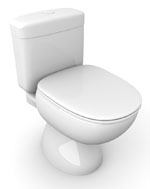 1. Check your toilet for leaks.
Put a few drops of food coloring in your toilet tank. If, without flushing, the coloring begins to appear in the bowl., you have a leak that may be wasting more than 100 gallons of water a day.
2. Stop using your toilet as an ashtray or wastebasket
Every cigarette butt or tissue you flush away also flushes away five to seven gallons of water.
3. Put a plastic bottle in your toilet tank
Put an inch or two of sand or pebbles in the bottom of a one liter bottle to weigh it down. Fill the rest of the bottle with water and put it in your toilet tank, safely away from the operating mechanism. In an average home, the bottle may save five gallons or more of water every day without harming the efficiency of the toilet. If your tank is big enough, you may even be able to put in two bottles.
4. Take shorter showers
A typical shower uses five to ten gallons of water a minute. Limit your showers to the time it takes to soap up, wash down and rise off.
5. Install water-saving shower heads or flow restrictors
Your hardware or plumbing supply store stocks inexpensive shower heads or flow restrictors that will cut your shower flow to about three gallons a minute instead of five to ten. They are easy to install, and your showers will still be cleansing and refreshing.
6. Take baths
A partially filled tub uses less water than all but the shortest showers.
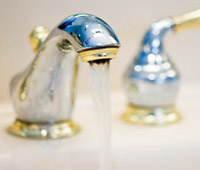 7. Turn off the water while brushing your teeth
Before brushing, wet your brush and fill a glass for rinsing your mouth.
8. Turn off the water while shaving
Fill the bottom of the sink with a few inches of warm water in which to rinse your razor.
9. Check faucets and pipes for leaks
Even a small drip can waste 50 or more gallons of water a day.
10. Use your automatic dishwasher for full loads only
Running your dishwasher less often saves water and money.
11. Use your automatic washing machine only for full loads only
Your automatic washer uses 30 to 35 gallons per cycle.
 12. Don't let the faucet run while you clean vegetables
Rinse your vegetables instead in a bowl or sink full of clean water.
13. Keep a bottle of drinking water in the refrigerator
This puts a stop to the wasteful practice of running tap water to cool it for drinking.
14. If you wash dishes by hand, don't leave the water running for rinsing
If you have two sinks, fill one with rinse water. If you have only one sink, first gather all your washed dishes in a dish rack, then rinse them quickly with a spray device or a pan of water.
15. Check faucets and pipes for leaks
Leaks waste water 24 hours a day, seven days a week. An inexpensive washer is usually enough to stop them.
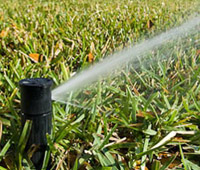 16. Water your lawn only when it needs it
Watering on a regular schedule doesn't allow for cool spells or rainfall which reduce the need for watering. Step on some grass. If it springs back up when you move your foot, it doesn't need water.
17. Deep-soak your lawn
When you do water your lawn, water it long enough for water to seep down to the roots where it is needed. A light sprinkling that sits on the surface will simply evaporate and be wasted.
18. Water during the cool parts of the day
Early morning is better than dusk since it helps prevent the growth of fungus.
19. Don't water the gutter
Position your sprinklers so that water lands on your lawn or garden, not in areas where it does no good. Also, avoid watering on windy days when much of your water may be carried off to the streets and sidewalks.
20. Plant drought-resistant trees and plants
Many beautiful trees and plants thrive without irrigation.
21. Put a layer of mulch around trees and plants.
Mulch slows the evaporation of moisture.
22. Use a broom to clean driveways, sidewalks and steps
Using a hose wastes hundreds and hundreds of gallons of water.
23. Don't run the hose while washing your car
Soap down your car from a pail of soapy water. Use a hose only to rinse it off.
24. Tell your children not to play with the hose and sprinklers
Children love to play under a hose or sprinkler on a hot day. Unfortunately, this practice is extremely wasteful of precious water and should be discouraged.
25. Check for leaks in pipes, hoses faucets and couplings
Leaks outside the house are easier to ignore since they since they don't mess up the floor or keep you awake at night. However, they can be even more wasteful than inside water leaks especially when they occur on your main water line.10

10WAYS TO SAVE WATER AT HOME
Our local leaders are facing the pressing question of how to ensure a clean, reliable WATER SUPPLY with strains from population growth, booming development, and global warming. Many communities are already enforcing water restrictions. There are a few simple things you can do at home to ease the burden on your local water supply and save money in the process.
- Turn off the faucet while brushing your teeth.
- Only run the washing machine and dishwasher when you have a full load.
- Use a low flow shower head and faucet aerators.
- Fix leaks.
- Install a dual flush or low flow toilet or put a conversion kit on your existing toilet.
- Don’t overwater your lawn or water during peak periods, and install rain sensors on irrigation systems.
- Install a rain barrel for outdoor watering.
- Plant a rain garden for catching stormwater runoff from your roof, driveway, and other hard surfaces.
- Monitor your water usage on your water bill and ask your local government about a home water audit.
- Share your knowledge about saving water through conservation and efficiency with your neighbors.
These water saving measures can have a big impact on water demand in local communities. While saving money, you also have the opportunity to get involved in your local community, protect the water in your local waterways so you can continue to enjoy their recreational benefits
Tips for Conserving Water
Bathrooms:
- Never use your toilet as a waste basket.
- Do not let the water run while shaving or brushing teeth.
- Take short showers instead of tub baths. Turn off the water flow while soaping or shampooing.
- If you must use a tub, close the drain before turning on the water and fill the tub only half full. Bathe small children together.
- Never pour water down the drain when there may be another use for it -such as watering a plant or garden.
Kitchen and Laundry:
- Keep drinking water in the refrigerator instead of letting the faucet run until the water is cool.
- Wash fruits and vegetables in a basin. Use a vegetable brush.
- Do not use water to defrost frozen foods, thaw in the refrigerator overnight.
- Use a dishpan for washing and rinsing dishes.
- Scrape, rather than rinse, dishes before loading into the dishwasher.
- Add food wastes to your compost pile instead of using the garbage disposal
- Operate the dishwasher only when completely full.
- Use the appropriate water level or load size selection on the washing machine.
Outside:
- Sweep driveways, sidewalks and steps rather than hosing off.
- Wash the car with water from a bucket, or consider using a commercial car wash that recycles water.
- When using a hose, control the flow with an automatic shut-off nozzle.
- Avoid purchasing recreational water toys that require a constant stream of water.
- If you have a swimming pool, consider a new water-saving pool filter.
- Lower pool water level to reduce amount of water splashed out.
- Use a pool cover to reduce evaporation when pool is not being used
Equipment:
- Repair all leaks. A leaky toilet can waste 200 gallons per day. To detect leaks in the toilet, add food coloring to the tank water. If the colored water appears in the bowl, the toilet is leaking. Toilet repair advice is available at www.toiletology.com/index.shtml.
- Install ultra-low flow toilets, or place a plastic container filled with water or gravel in the tank of your conventional toilet. Be sure it does not interfere with operation of the toilet’s flush mechanism.
- Install low-flow aerators and showerheads.
- Consider purchasing a high efficiency washing machine which can save over 50% in water and energy use.

Water Efficiency Measures for Landscaping
Watering:
- Detect and repair all leaks in irrigation systems.
- Use properly treated wastewater for irrigation where available.
- Water the lawn or garden during the coolest part of the day (early morning is best). Do not water on windy days.
- Water trees and shrubs, which have deep root systems, longer and less frequently than shallow-rooted plants which require smaller amounts of water more often. Check with the local extension service for advice on the amount and frequency of watering needed in your area.
- Set sprinklers to water the lawn or garden only - not the street or sidewalk.
- Use soaker hoses and trickle irrigation systems.
- Install moisture sensors on sprinkler systems.
Planting:
- Have your soil tested for nutrient content and add organic matter if needed. Good soil absorbs and retains water better.
- Minimize turf areas and use native grasses.
- Use native plants in your landscape - they require less care and water than ornamental varieties.
Maintaining:
- Use mulch around shrubs and garden plants to reduce evaporation from the soil surface and cut down on weed growth.
- Remove thatch and aerate turf to encourage movement of water to the root zone.
- Raise your lawn mower cutting height - longer grass blades help shade each other, cut down on evaporation, and inhibit weed growth.
- Minimize or eliminate fertilizing which requires additional watering, and promotes new growth which will also need additional watering.
Ornamental Water Features:
- Do not install or use ornamental water features unless they recycle the water. Use signs to indicate that water is recycled. Do not operate during a drought.
Conclusion
Lack of water is a big issue in many countries. It is a symbiotic factor and important element to which life depends on. The level of drinking water under the ground is becoming less because of the disturbance in the natural filtering system. Deforestation and lack of plants causes rain water to run away instead of going inside the ground. We should follow all the key activities regarding save water from loss, unnecessary use and waste as well as damage of water quality.
References
- ^ "Measures to reduce personal water use - Defra - Citizen Space". consult.defra.gov.uk. Retrieved 2021-09-13.
- ^ "Cases in Water Conservation: How Efficiency Programs Help Water Utilities Save Water and Avoid Costs". EPA.gov. US Environmental Protection Agency.
- ^ a b Duane D. Baumann; John J. Boland; John H. Sims (April 1984). "Water Conservation: The Struggle over Definition". Water Resources Research. 20 (4): 428–434. Bibcode:1984WRR....20..428B. doi:10.1029/WR020i004p00428.
- ^ a b Vickers, Amy (2002). Water Use and Conservation. Amherst, MA: water plow Press. p. 434. ISBN 978-1-931579-07-0.
- ^ a b Geerts, S.; Raes, D. (2009). "Deficit irrigation as an on-farm strategy to maximize crop water productivity in dry areas". Agric. Water Manage. 96 (9): 1275–1284. doi:10.1016/j.agwat.2009.04.009.
- ^ "Sustainable Construction of Water Structures", Sustainable Water Engineering, Chichester, UK: John Wiley & Sons, Ltd, p. 1, 2014-06-03, ISBN 978-1-118-54103-6, retrieved 2023-02-19
- ^ Hermoso, Virgilio; Abell, Robin; Linke, Simon; Boon, Philip (June 2016). "The role of protected areas for freshwater biodiversity conservation: challenges and opportunities in a rapidly changing world: Freshwater protected areas". Aquatic Conservation. 26: 3–11. doi:10.1002/aqc.2681. S2CID 88786689.
- ^ a b c d e f Kumar Kurunthachalam, Senthil (2014). "Water Conservation and Sustainability: An Utmost Importance". Hydrol Current Res.
- ^ a b c "Description of the Hydrologic Cycle". nwrfc.noaa.gov/rfc/. NOAA River Forecast Center
By-Alisha Salim Shaikh(B.ed. First Year)
- ^ "Measures to reduce personal water use - Defra - Citizen Space". consult.defra.gov.uk. Retrieved 2021-09-13.
- ^ "Cases in Water Conservation: How Efficiency Programs Help Water Utilities Save Water and Avoid Costs". EPA.gov. US Environmental Protection Agency.
- ^ a b Duane D. Baumann; John J. Boland; John H. Sims (April 1984). "Water Conservation: The Struggle over Definition". Water Resources Research. 20 (4): 428–434. Bibcode:1984WRR....20..428B. doi:10.1029/WR020i004p00428.
- ^ a b Vickers, Amy (2002). Water Use and Conservation. Amherst, MA: water plow Press. p. 434. ISBN 978-1-931579-07-0.
- ^ a b Geerts, S.; Raes, D. (2009). "Deficit irrigation as an on-farm strategy to maximize crop water productivity in dry areas". Agric. Water Manage. 96 (9): 1275–1284. doi:10.1016/j.agwat.2009.04.009.
- ^ "Sustainable Construction of Water Structures", Sustainable Water Engineering, Chichester, UK: John Wiley & Sons, Ltd, p. 1, 2014-06-03, ISBN 978-1-118-54103-6, retrieved 2023-02-19
- ^ Hermoso, Virgilio; Abell, Robin; Linke, Simon; Boon, Philip (June 2016). "The role of protected areas for freshwater biodiversity conservation: challenges and opportunities in a rapidly changing world: Freshwater protected areas". Aquatic Conservation. 26: 3–11. doi:10.1002/aqc.2681. S2CID 88786689.
- ^ a b c d e f Kumar Kurunthachalam, Senthil (2014). "Water Conservation and Sustainability: An Utmost Importance". Hydrol Current Res.
- ^ a b c "Description of the Hydrologic Cycle". nwrfc.noaa.gov/rfc/. NOAA River Forecast Center
Comments
Post a Comment